
OUR Building
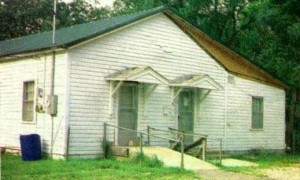
For almost half a century the building, now known as the Eddie Mae Herron Center, served as the hub for religious and educational activities for the African American community in Pocahontas and the surrounding communities. This small, unadorned, one-room frame building was built in 1919 and became known as the St. Mary’s AME Church. The building soon took on another name in keeping with its function: “Pocahontas Colored School.” For about thirty years after its construction, the building would continue to serve as a church, while its function as a school would stretch on until the passage of Civil Rights legislation in the 1960s. In addition to these uses, the building has through the years housed many community events for the African American community.
1864 -1919
The history of St. Mary’s AME Church, also known as St. Mary’s Chapel, actually dates to “a short time prior to the year of 1865,” according to Arkansas Historical Record Survey/Church Inventory completed in 1941 by the WPA. The survey continues to lay out the church’s background:
“…a small group of people, consisting of four or five persons, decided they would like to have an organized church and church house for the colored people here in Pocahontas and in order to pay for their building they organized a Society for the purpose of raising the money, calling it the Union Aid. They gave suppers and held what they called jug breakings. Each person put into the jug as much money as he or she felt they could afford. At a certain date, the jug was broken open and the contents counted. And in this way they paid for their building.
In 1865 they organized the African Methodist Episcopal Church. This church building was in the northern part of the city (Bland at Schoonover Street). According to the late Omah Taylor, daughter of slaves, “the colored church was also the school and was located at the same spot where they later built the city water tank, on Schoonover Street.
In 1919 this original building was torn down and the church moved to the south part of the city (Archer at Pratt Street) where the African American people were more widely settled. The popular name for the church has always been St. Mary’s Chapel. Active organizations of the church included Sunday School and Missionary Society. The record goes on to say the earliest clergyman was Wess Powers (1865), but the first settled clergyman was J. M. Turner (1865-1868); another minister was Rev. W. N, Knox (1940-41).
1918 – 1948
A group of individuals—the St. Mary’s A.M.E. Board of Trustees—purchased two lots in the Shannon Addition of Pocahontas in August of 1918. These trustees were Bob Taylor, Ransom Looney, W.H. Powers, and Henry Armstrong. Once the building was constructed, Deacon Henry Taylor pastored the church until his death in 1948. During these years, as early as the 1930s, the African American community in Pocahontas also began using the building as a school, though the school year in those early years lasted only a couple of months, and the education program lacked a clearly defined structure.
On June 30, 1948, the St. Mary’s Trustees – Essie Johnson, Birdie Pitman, and Delia Henderson – entered into an agreement with the Pocahontas Special School District to transfer to the public school board ownership of the land, along with an extra lot and the school building, with certain provisions. The warranty deed signed on that date mentions the unanimous vote of the congregation in authorizing the action. The agreement signaled an understanding that the School Board would “arrange for a building of sufficient size and comfort to accommodate the congregation of St. Mary’s A.M.E. Church of Pocahontas, and also suitable [sic] arranged for Public School to accommodate the colored children of said Pocahontas Special School District.”
1948 – 1964
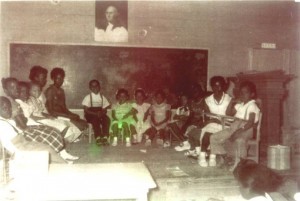
Although the building remained technically a church, the religious function of the building later waned. Church services were held less regularly after the death of paster Henry Taylor, and the school function became predominant. The Pocahontas Colored School, as it came to be called, continued to function even after Brown vs. Board of Education declared segregated schools inherently unequal and unconstitutional. Children in grades one through eight continued to attend school in this single room as before, only now they received a measure of financial support, limited services, and over-sight from the public school system. Pocahontas Public Schools began furnishing a bus to transport Black children in grades nine through twelve to a segregated Black school in Newport. The one and only teacher in the Pocahontas Colored School from the time it came under the jurisdiction of the public school was Mrs. Eddie Mae Herron. Mrs. Herron came to the Pocahontas Colored School when her job as teacher at the Biggers school for Black children ended with that school’s closure. Those Biggers children were then bused to the Pocahontas Colored School at that time. Mrs. Herron was still the teacher at Pocahontas Colored School until Civil Rights legislation forced integration of the Pocahontas schools at the end of the 1964 school year.
1964 – 1985
 The church/school building ceased to exist in that function at that point. In 1967, Black River Area Development Corporation, a community action agency assisting low-income families, acquired use of the building as a pre-school/day care center under the name, McDonald Head Start/Day Care Center. This agency added a kitchen area to the building, as well as a “side room” for additional space. Other modifications included floor carpeting and paneling and other alterations to the walls of the original room. The building continued to serve this function until 1985, when a new day-care center was acquired elsewhere and the facility was no longer needed.
1986 – 2000
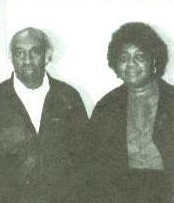
Local leaders of the African American community became concerned at the deteriorating state of the historic building. In 1986, Roland and Helen McCarroll contacted the building’s owners, the Pocahontas School District, and received permission from school officials for the building to be used as a Senior Center where quilting, crafts, and other community activities, such as feeding of bereaved families, could take place. Once permission was granted, the building once again became a community hub for the African American community in Pocahontas.
2000 – Present
However, upkeep of the building proved expensive and difficult. Their continued concern and interest in preserving and restoring the old church/school prompted younger members of the African American community to begin preservation efforts. In November of 2000, Pat Johnson organized those who had attended school there, as well as members of the older generations, to create the “Eddie Mae Herron Center” Board of Directors. This group of twelve members of the African American community formed a nonprofit corporation and secured community support. The initial encouragement for the task came from Wayne Gearhart, Director of the Pocahontas Area Chamber of Commerce, and was followed by support from the City of Pocahontas, Black River Technical College, and many other community groups and individuals.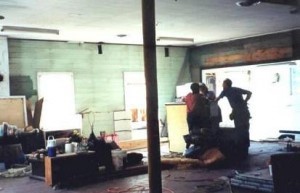
In April, 2001, the Eddie Mae Herron Center Board requested and received from the Pocahontas School District a quitclaim deed to the property. The Board set as its goals restoring the building to its original state, establishing it as a museum to tell the story of the African American experience in Randolph County, and securing funding to maintain the facility in the future.
The project received a needed lifeline when the Pocahontas City Council provided $35,000 in funding assistance. In addition, many individuals made donations for restoration purposes. A new roof was installed, part of which is the same sort of metal covering as on the original roof. Other work included the installation of blown-in insulation and central heat and air; plumbing up-dates and other restroom alterations; the addition of period-appropriate schoolhouse lights and ceiling fans; and restoration of the original floor and walls by the stripping away of newer surfaces.
Black River Technical College hosted a town meeting in the fall of 2001, bringing together the Eddie Mae Herron Board and other interested supporters with representatives of the Historic Preservation Alliance from Little Rock. Following this meeting, the Eddie Mae Herron Board affirmed its desire to secure addition of the building to the National Register of Historic Places, and made all subsequent modifications in accordance with this goal. BRTC prepared and submitted the nomination, which then was approved by the Department of Arkansas Heritage for inclusion on the National Register.
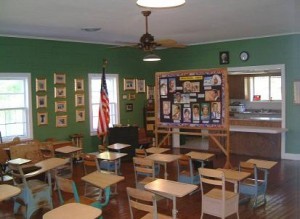
The BRTC Foundation applied for and received a grant from the Arkansas Humanities Council for a celebration of the official opening of the Eddie Mae Herron Center. The grant and matching support by the College covered not only the public lecture, tours, and performances marking the opening of the center, but also the purchase of educational materials—videos and books—to be housed in the center for use by students of all ages.
OUR Building
For almost half a century the building, now known as the Eddie Mae Herron Center, served as the hub for religious and educational activities for the African American community in Pocahontas and the surrounding communities. This small, unadorned, one-room frame building was built in 1919 and became known as the St. Mary’s AME Church. The building soon took on another name in keeping with its function: “Pocahontas Colored School.” For about thirty years after its construction, the building would continue to serve as a church, while its function as a school would stretch on until the passage of Civil Rights legislation in the 1960s. In addition to these uses, the building has through the years housed many community events for the African American community.
1864 -1919
The history of St. Mary’s AME Church, also known as St. Mary’s Chapel, actually dates to “a short time prior to the year of 1865,” according to Arkansas Historical Record Survey/Church Inventory completed in 1941 by the WPA. The survey continues to lay out the church’s background:
“…a small group of people, consisting of four or five persons, decided they would like to have an organized church and church house for the colored people here in Pocahontas and in order to pay for their building they organized a Society for the purpose of raising the money, calling it the Union Aid. They gave suppers and held what they called jug breakings. Each person put into the jug as much money as he or she felt they could afford. At a certain date, the jug was broken open and the contents counted. And in this way they paid for their building.
In 1865 they organized the African Methodist Episcopal Church. This church building was in the northern part of the city (Bland at Schoonover Street). According to the late Omah Taylor, daughter of slaves, “the colored church was also the school and was located at the same spot where they later built the city water tank, on Schoonover Street.
In 1919 this original building was torn down and the church moved to the south part of the city (Archer at Pratt Street) where the African American people were more widely settled. The popular name for the church has always been St. Mary’s Chapel. Active organizations of the church included Sunday School and Missionary Society. The record goes on to say the earliest clergyman was Wess Powers (1865), but the first settled clergyman was J. M. Turner (1865-1868); another minister was Rev. W. N, Knox (1940-41).
1918 – 1948
A group of individuals—the St. Mary’s A.M.E. Board of Trustees—purchased two lots in the Shannon Addition of Pocahontas in August of 1918. These trustees were Bob Taylor, Ransom Looney, W.H. Powers, and Henry Armstrong. Once the building was constructed, Deacon Henry Taylor pastored the church until his death in 1948. During these years, as early as the 1930s, the African American community in Pocahontas also began using the building as a school, though the school year in those early years lasted only a couple of months, and the education program lacked a clearly defined structure.
On June 30, 1948, the St. Mary’s Trustees – Essie Johnson, Birdie Pitman, and Delia Henderson – entered into an agreement with the Pocahontas Special School District to transfer to the public school board ownership of the land, along with an extra lot and the school building, with certain provisions. The warranty deed signed on that date mentions the unanimous vote of the congregation in authorizing the action. The agreement signaled an understanding that the School Board would “arrange for a building of sufficient size and comfort to accommodate the congregation of St. Mary’s A.M.E. Church of Pocahontas, and also suitable [sic] arranged for Public School to accommodate the colored children of said Pocahontas Special School District.”
1948 – 1964
Although the building remained technically a church, the religious function of the building later waned. Church services were held less regularly after the death of paster Henry Taylor, and the school function became predominant. The Pocahontas Colored School, as it came to be called, continued to function even after Brown vs. Board of Education declared segregated schools inherently unequal and unconstitutional. Children in grades one through eight continued to attend school in this single room as before, only now they received a measure of financial support, limited services, and over-sight from the public school system. Pocahontas Public Schools began furnishing a bus to transport Black children in grades nine through twelve to a segregated Black school in Newport. The one and only teacher in the Pocahontas Colored School from the time it came under the jurisdiction of the public school was Mrs. Eddie Mae Herron. Mrs. Herron came to the Pocahontas Colored School when her job as teacher at the Biggers school for Black children ended with that school’s closure. Those Biggers children were then bused to the Pocahontas Colored School at that time. Mrs. Herron was still the teacher at Pocahontas Colored School until Civil Rights legislation forced integration of the Pocahontas schools at the end of the 1964 school year.
1964 – 1985
The church/school building ceased to exist in that function at that point. In 1967, Black River Area Development Corporation, a community action agency assisting low-income families, acquired use of the building as a pre-school/day care center under the name, McDonald Head Start/Day Care Center. This agency added a kitchen area to the building, as well as a “side room” for additional space. Other modifications included floor carpeting and paneling and other alterations to the walls of the original room. The building continued to serve this function until 1985, when a new day-care center was acquired elsewhere and the facility was no longer needed.
1986 – 2000
Local leaders of the African American community became concerned at the deteriorating state of the historic building. In 1986, Roland and Helen McCarroll contacted the building’s owners, the Pocahontas School District, and received permission from school officials for the building to be used as a Senior Center where quilting, crafts, and other community activities, such as feeding of bereaved families, could take place. Once permission was granted, the building once again became a community hub for the African American community in Pocahontas.
2000 – Present
However, upkeep of the building proved expensive and difficult. Their continued concern and interest in preserving and restoring the old church/school prompted younger members of the African American community to begin preservation efforts. In November of 2000, Pat Johnson organized those who had attended school there, as well as members of the older generations, to create the “Eddie Mae Herron Center” Board of Directors. This group of twelve members of the African American community formed a nonprofit corporation and secured community support. The initial encouragement for the task came from Wayne Gearhart, Director of the Pocahontas Area Chamber of Commerce, and was followed by support from the City of Pocahontas, Black River Technical College, and many other community groups and individuals.
In April, 2001, the Eddie Mae Herron Center Board requested and received from the Pocahontas School District a quitclaim deed to the property. The Board set as its goals restoring the building to its original state, establishing it as a museum to tell the story of the African American experience in Randolph County, and securing funding to maintain the facility in the future.
The project received a needed lifeline when the Pocahontas City Council provided $35,000 in funding assistance. In addition, many individuals made donations for restoration purposes. A new roof was installed, part of which is the same sort of metal covering as on the original roof. Other work included the installation of blown-in insulation and central heat and air; plumbing up-dates and other restroom alterations; the addition of period-appropriate schoolhouse lights and ceiling fans; and restoration of the original floor and walls by the stripping away of newer surfaces.
Black River Technical College hosted a town meeting in the fall of 2001, bringing together the Eddie Mae Herron Board and other interested supporters with representatives of the Historic Preservation Alliance from Little Rock. Following this meeting, the Eddie Mae Herron Board affirmed its desire to secure addition of the building to the National Register of Historic Places, and made all subsequent modifications in accordance with this goal. BRTC prepared and submitted the nomination, which then was approved by the Department of Arkansas Heritage for inclusion on the National Register.
The BRTC Foundation applied for and received a grant from the Arkansas Humanities Council for a celebration of the official opening of the Eddie Mae Herron Center. The grant and matching support by the College covered not only the public lecture, tours, and performances marking the opening of the center, but also the purchase of educational materials—videos and books—to be housed in the center for use by students of all ages.
CORNER STONES
St Mary’s A.M.E. Church The Eddie Mae Herron Center building originally housed St. Mary’s African Methodist Episcopal Church, and the original building marker or cornerstone is still on the property.
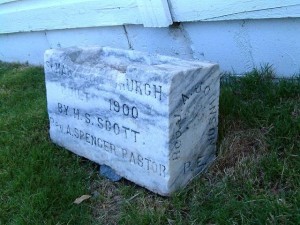
Rev. J. A. Johnson P. E.
“P.E.” stands for “Presiding Elder”. This title was once used in Methodist Churches to identify the person in charge of all the churches in a particular area of a state. In more modern times the title has been changed to “District Superintendent”.
The C.C. Scott Gravestone
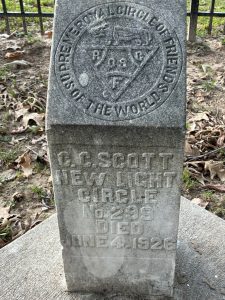
This is the grave stone of C. C. Scott, an African American who moved to the Biggers, Arkansas area in the 19th century. Scott became quite wealthy, owning much farmland in the Biggers area as well as Scott’s Ferry on the Current River. When Scott died in 1926 he was buried on his land, but in later years his headstone was found laying in a ditch, the family cemetery property apparently having been cleared and turned into farmland. Those who found the stone felt the Eddie Mae Herron Center was an appropriate place to display the stone.
The Biggers Baptist Cornerstone
FIRST BAPTIST CHURCH OF BIGGERS REV. J. W. HARMON PASTOR L. M. MANSKER CH:R W. M. DUCKWORTH P. J. JOHNSON L. B. BYRD H. B. BYRD J. M. MAHAN JOE CARR DEACONS 1907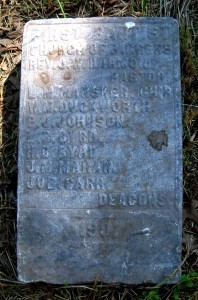
Miss Eddie Mae
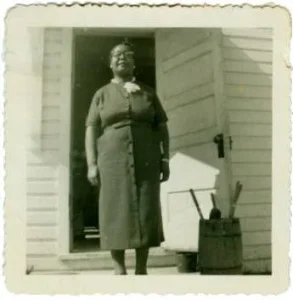
Miss Eddie Mae: The students just called her “Miss Eddie Mae.” Eddie Mae Herron was the heart of the school for the African American children who attended between 1948 and 1965. It was in her honor that a group of people spearheaded and conducted the efforts to restore the former Colored School and give the building the name “The Eddie Mae Herron Center.”
From 1948 until 1965, she was the teacher for every African American child who passed through the one-room school on Archer Street.
Miss Eddie Mae began teaching in 1940 at the Biggers Colored School in Biggers, Arkansas, and moved with her students to Pocahontas when that school closed. In the Pocahontas Colored School, she taught every subject—reading, writing, math, health, civics, penmanship, music, and even drama. She also held evening classes for parents, extending education beyond the children to strengthen families and the wider community.
A graduate of Philander Smith College in Little Rock, with additional study in reading, science, and health at the University of Arkansas, Miss Eddie Mae brought both education and creativity to her students. Parents were always welcome in her classroom, and former students remember it as “a place where we had everything we needed for learning.” One student put it simply: “It was a place where I learned pretty much everything I know.”
When the school closed in 1965, Miss Eddie Mae continued teaching reading in the Pocahontas Public Schools before moving to Blytheville, where she lived until her death a few years later. She left behind not only a legacy of education, but also a spirit of resilience, dignity, and care that still shapes the community today.
Pat Johnson: NEA National Heritage Fellowship